7 Mistakes Businesses Make When Hiring Freelancers
Hiring the right freelancer can accelerate your business. Hiring the wrong one can cost you time, money, and momentum.
Freelancers give businesses access to specialized skills, flexible teams, and experienced professionals without the commitment of a full-time hire.
But finding a freelancer is only the beginning.
The real challenge is finding the right professional for the specific project.
Too often, businesses make hiring decisions based mainly on price, availability, or an impressive-looking profile. Important factors such as relevant experience, communication, project requirements, and delivery expectations can get overlooked.
The result can be:
- Missed deadlines
- Endless revisions
- Communication gaps
- Unexpected costs
- Poor-quality work
If you're planning to hire a freelancer, here are 7 common mistakes you should avoid.
The 7 Hiring Mistakes to Avoid
- Choosing a freelancer based only on price
- Not checking for relevant experience
- Creating an unclear project brief
- Underestimating the importance of communication
- Not breaking large projects into milestones
- Skipping the portfolio and work history
- Hiring the first freelancer who looks good
1. Don't Let the Lowest Price Make the Decision
Cheap Doesn't Always Mean Better Value
One of the most common mistakes businesses make is choosing the freelancer with the lowest quote.
A lower price can certainly be attractive, but it doesn't necessarily mean you're getting the best value.
A freelancer charging more may have deeper experience, communicate more effectively, solve problems faster, and require fewer revisions.
Before Comparing Prices, Consider:
- Relevant experience
- Quality of previous work
- Communication
- Problem-solving ability
- Reliability
- Expected delivery time
Key Insight: The goal isn't to find the cheapest freelancer. It's to find the best fit for your project, requirements, and budget.
2. Experience Matters, But Relevant Experience Matters More
Look for Someone Who Has Solved Similar Problems Before
A freelancer may have years of experience and still not be the right choice for your project.
What matters most is whether they've successfully handled work similar to what you need.
For example, if you're building an eCommerce website, a freelancer with proven eCommerce experience may be a better fit than someone who has primarily worked on basic portfolio websites.
Similarly, if your project involves AI automation, look for someone who has worked with comparable AI or automation requirements.
Ask These Questions Before Hiring:
- Have they worked on similar projects?
- Do they understand the requirements of your industry?
- Have they used the tools or technologies your project requires?
- Can they clearly explain their previous work?
- Can they demonstrate relevant results?
Remember: Relevant experience is often more valuable than a long list of general experience.
3. A Vague Project Brief Creates Vague Results
Clear Requirements Lead to Better Proposals and Better Outcomes
Freelancers can only deliver effectively when they understand what they're being asked to build.
An unclear project description can attract the wrong candidates and create misunderstandings once the work begins.
A Strong Project Brief Should Clearly Explain:
- Project requirements
- Required skills
- Expected deliverables
- Project goals
- Timeline
- Budget
- Required tools or technologies
Instead of:
"Need a website."
Give Freelancers Enough Context:
"We need a responsive five-page business website with a contact form, mobile optimization, and a CMS that allows our team to update content."
The more clearly you define the project, the easier it becomes for qualified freelancers to understand your needs and submit relevant proposals.
It also reduces the chances of scope misunderstandings later.
Key Insight: A clear brief doesn't just help freelancers. It helps businesses attract the right freelancers in the first place.
4. Don't Underestimate Communication
Technical Skills Aren't Enough
Technical ability matters, but communication can have just as much impact on a project's success.
Even a highly skilled freelancer can become difficult to work with if they don't communicate clearly or consistently.
Watch for Warning Signs:
- Unclear responses
- Long periods without updates
- Failure to ask important questions
- Difficulty understanding instructions
- Delays that aren't communicated early
- Unclear expectations around deliverables
Before hiring, don't just ask whether they can do the work.
Ask them how they would approach it.
Try Asking:
How would you approach this project?
What information would you need before getting started?
What challenges do you anticipate?
Their answers can tell you a lot about their understanding of the project, communication style, and overall approach to the work.
Good Communication = Fewer Problems Strong communication early in the project often prevents bigger problems later.
5. Break Large Projects Into Milestones
Don't Wait Until the Final Deadline to Discover a Problem
Large projects shouldn't always be treated as one massive task with a single final deadline.
Breaking the work into milestones makes progress easier to track and gives both the business and freelancer clear checkpoints throughout the project.
Example: Website Development
Milestone 1 — Planning
Project requirements, structure, and technical planning.
Milestone 2 — Design
Wireframes, visual design, and user interface.
Milestone 3 — Development
Frontend, backend, integrations, and functionality.
Milestone 4 — Testing
Bug fixing, responsiveness, performance, and quality checks.
Milestone 5 — Final Delivery
Final review, deployment, and handover.
Each milestone should have clearly defined deliverables and an expected completion date.
Why Milestones Help:
- Track progress
- Review work earlier
- Create accountability
- Identify problems sooner
- Reduce project risk
- Make large projects easier to manage
For larger or more complex projects, milestones can make the entire process much easier to manage.
6. Your Portfolio Shows What You Can Actually Do
Don't Hire Based Only on What a Freelancer Says
A freelancer's profile description can tell you what they claim to do.
Their portfolio can show you what they've actually done.
Before hiring, take the time to review their previous work and look for projects that are relevant to your requirements.
A Portfolio Can Help You Evaluate:
- Quality of work
- Design or working style
- Technical capabilities
- Relevant industry experience
- Attention to detail
- Consistency
Don't be impressed by the number of projects alone.
A freelancer with dozens of unrelated projects may be a weaker fit than someone with a smaller portfolio containing highly relevant work.
Where available, also consider:
- Client feedback
- Work history
- Certifications
- Professional experience
- Evidence of previous results
The Key Question: Can this freelancer demonstrate that they can do the work your project requires?
7. Don't Hire the First Freelancer Who Looks Good
Compare Before You Commit
Finding one promising freelancer can feel like the hard part is over.
But hiring the first person who looks suitable can prevent you from discovering better options.
Whenever possible, compare several relevant freelancers before making your decision.
Compare Candidates Across These Factors:
| Factor | What to Look For |
| ----------------- | ------------------------------------------------------- |
| Skills | Do they have the expertise your project requires? |
| Experience | Have they handled similar projects successfully? |
| Portfolio | Is their previous work relevant to your needs? |
| Communication | Do they understand the project and communicate clearly? |
| Timeline | Can they realistically meet your deadline? |
| Pricing | Does their proposal fit your budget? |
| Reliability | Do they have a track record of delivering? |
You don't need to choose the freelancer with the lowest price or the most impressive profile.
You need to choose the one who offers the strongest overall fit for your project.
How to Hire Freelancers the Right Way
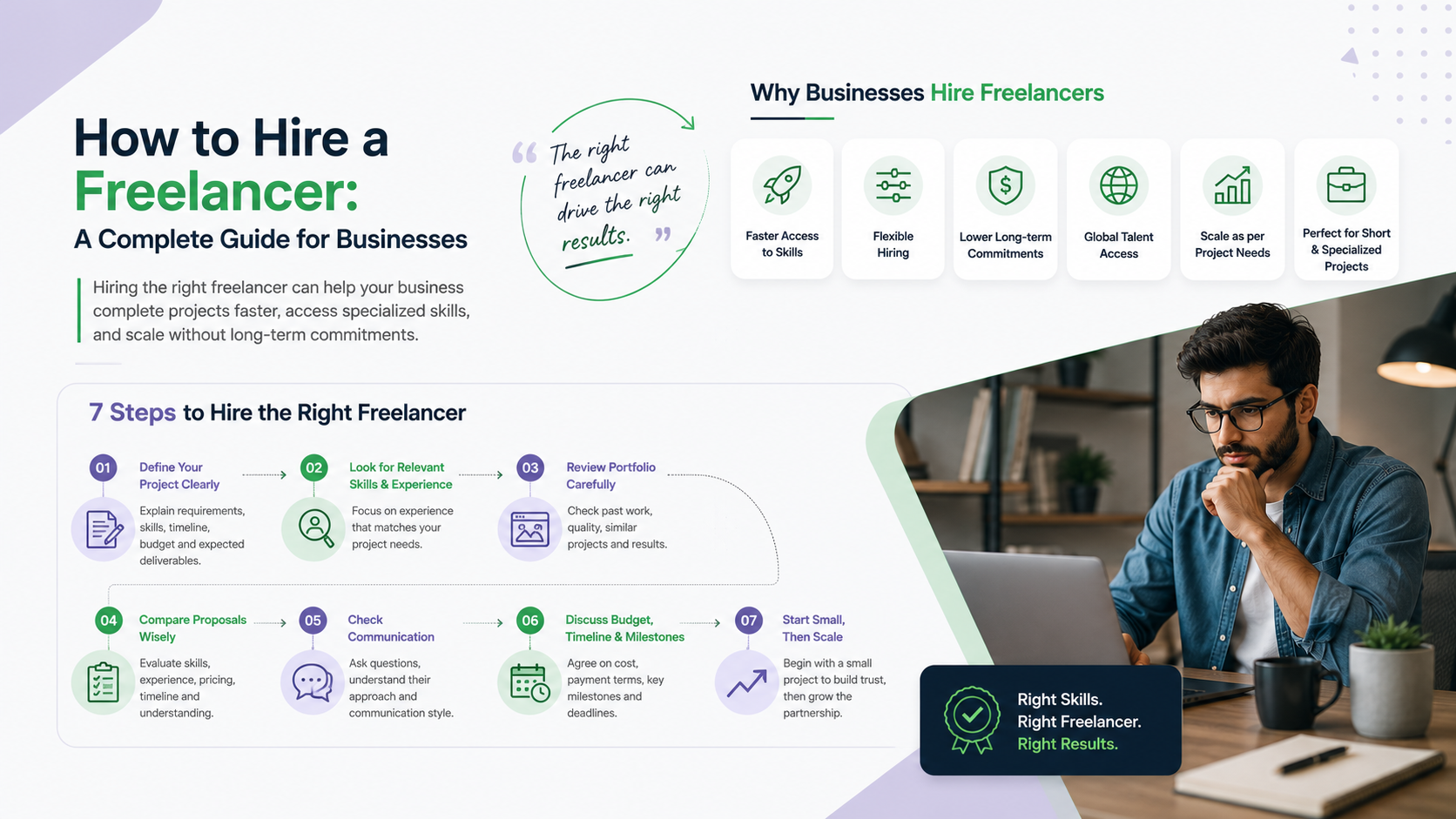
Avoiding these mistakes becomes much easier when you follow a structured hiring process.
Step 1 — Clearly Define the Project
Before looking for freelancers, make sure you understand what you need.
Define the project's:
- Scope
- Goals
- Deliverables
- Timeline
- Budget
The clearer the project, the easier it becomes to find the right professional.
Step 2 — Identify the Skills You Need
List the technical, creative, or professional skills required to complete the project.
This gives you a clear benchmark when evaluating candidates.
Step 3 — Find and Review Relevant Freelancers
Look at:
- Profiles
- Portfolios
- Previous projects
- Work history
- Client feedback
Focus on freelancers whose experience closely matches your requirements rather than simply choosing candidates with the most experience overall.
Step 4 — Discuss the Project
Talk to potential freelancers before making a final decision.
Ask about:
- Their approach
- Availability
- Communication process
- Understanding of requirements
- Expected challenges
This conversation can reveal things that a profile alone cannot.
Step 5 — Compare Proposals
Don't compare proposals based on price alone.
Evaluate:
- Proposed scope
- Deliverables
- Timeline
- Experience
- Communication
- Overall approach
- Pricing
The cheapest proposal isn't automatically the best proposal.
Step 6 — Set Clear Milestones
For larger projects, divide the work into manageable stages with specific deliverables and deadlines.
This creates accountability and makes progress easier to track.
Step 7 — Choose Based on Overall Value
Finally, evaluate everything together:
Skills + Experience + Communication + Reliability + Project Fit + Price
The best freelancer isn't necessarily the cheapest one.
It's the professional who can deliver the right results within your project's expectations.
Freelancer Hiring Checklist
Before making your final decision, make sure you've considered:
- Relevant skills
- Similar project experience
- Relevant portfolio
- Clear communication
- Realistic timeline
- Transparent pricing
- Clearly defined deliverables
- Milestones, when necessary
- Overall project fit
A structured evaluation process can help you make more confident hiring decisions and reduce avoidable project risks.
Why the Right Hiring Process Matters
Hiring the wrong freelancer can cost more than money.
It can lead to:
Missed Deadlines
Projects take longer than expected and business plans get delayed.
Repeated Revisions
Poor understanding of requirements can result in endless changes.
Communication Problems
Lack of updates can make it difficult to know what's happening.
Additional Costs
Unexpected work and repeated revisions can increase project expenses.
Poor-Quality Work
The final result may not meet the expected standard.
Project Delays
Small problems can become major issues when they're discovered too late.
A thoughtful hiring process helps businesses identify potential problems before making a commitment.
The Goal Don't hire the person who responds first or offers the lowest price. Hire the professional who best matches your project requirements, expectations, and business goals.
Find the Right Freelancer With LoudSup
The Right Talent Can Make All the Difference
Finding the right freelance professional shouldn't feel like a guessing game.
LoudSup helps businesses connect with freelance professionals across a range of skill categories, making it easier to find talent based on specific project requirements and professional expertise.
Whether you need a:
Developer · Designer · AI Specialist · Digital Marketer · Writer · or another professional
the objective remains the same:
Find the Right Talent for the Right Project.
Ready to Hire Smarter?
Avoid common hiring mistakes and find professionals who fit your project with LoudSup.
Hire smarter. Find the right talent. Build better teams.
Frequently Asked Questions
What Is the Biggest Mistake When Hiring a Freelancer?
Choosing a freelancer based only on price is one of the most common mistakes businesses make.
Price is important, but it should be evaluated alongside relevant experience, skills, communication, reliability, and overall project fit.
How Can Businesses Avoid Hiring the Wrong Freelancer?
Start by clearly defining your project requirements.
Then review relevant portfolios, compare multiple suitable freelancers, discuss expectations, and evaluate communication before making your decision.
For larger engagements, starting with a smaller project can also help you evaluate how well a freelancer works before committing to a larger scope.
Should I Always Hire the Cheapest Freelancer?
No.
The lowest price doesn't necessarily mean the best value.
Consider the freelancer's experience, skills, communication, reliability, expected quality, and ability to meet your requirements alongside their pricing.
Why Are Milestones Important in Freelance Projects?
Milestones break a large project into manageable stages.
They make deliverables, deadlines, responsibilities, and progress easier to track and give both sides opportunities to identify issues before they affect the final delivery.
How Many Freelancers Should I Compare Before Hiring?
There isn't a fixed number.
The goal is to compare enough relevant professionals to understand your options and make an informed decision.
Focus on quality and project fit rather than comparing candidates simply for the sake of having a larger list.
Final Thoughts
Freelancers can give businesses access to specialized expertise, flexible staffing, and talent from around the world.
But the success of a freelance project often starts before the freelancer is hired.
Clearly defining your requirements, checking relevant experience, reviewing portfolios, evaluating communication, setting milestones, and comparing suitable candidates can significantly improve your chances of making the right hiring decision.
## The Right Freelancer Isn't Simply the Person Who Is Available. It's the professional who is the right fit for your project.
With a structured hiring process and access to the right talent, businesses can reduce project risks, hire with greater confidence, and build stronger freelance teams.
LoudSup makes it easier to find the right talent for the right project.
Hire smarter. Find better talent. Build stronger teams.
LoudSup Team
Writer at LoudSup
How Freelancers Can Build a Profile That Gets More Client Attention
Next →How to Hire Verified Freelancers in 2026: The Complete Guide for Businesses