Freelance Marketplace: How Businesses Can Hire Freelancers Safely
Businesses no longer need to limit their search for professional talent to their local area. With the growth of remote work and online platforms, companies can now connect with freelancers from different locations, skill sets, and experience levels.
A freelance marketplace makes this process easier by giving businesses a place to discover freelance professionals, review their experience, explore portfolios, and find talent based on specific project requirements.
However, finding a freelancer is only the beginning. A successful project also depends on choosing the right professional, clearly defining the scope of work, setting expectations, managing milestones, and understanding payment terms.
This guide explains how businesses can use an online freelance marketplace effectively and what they should consider before hiring a freelancer.
What Is a Freelance Marketplace?
A freelance marketplace is an online platform where businesses can discover and connect with freelance professionals for different types of projects.
Instead of searching across multiple websites, social networks, or personal connections, businesses can use a marketplace to explore professionals based on their skills, experience, and project requirements.
Depending on the platform, a freelance marketplace may help businesses:
- Discover freelance professionals
- Search for specific skills or categories
- Review freelancer profiles
- Explore portfolios and previous work
- Compare relevant experience
- Discuss project requirements
- Organize project work
- Set and manage milestones
- Manage project payments
The features and processes can differ from one platform to another. Before starting a project, businesses should understand how the marketplace handles hiring, payments, milestones, and other project-related processes.
How Businesses Use Freelance Marketplaces
Businesses can use freelance marketplaces for both short-term projects and ongoing work.
For example, a company may need:
- A website developer
- An AI or automation specialist
- A digital marketing professional
- A graphic or UI/UX designer
- A writer or translator
- A data professional
- A mobile app developer
The process should begin with a clear understanding of what the project actually requires.
A good project description should explain:
- What needs to be done
- Required skills
- Expected deliverables
- Project timeline
- Important requirements
- Any specific expectations
When the project requirements are clear, businesses can more easily identify freelancers whose skills and experience are relevant to the work.
How to Find the Right Freelancer
Finding the right freelancer is about more than simply finding someone who is available.
Businesses should look for a professional whose skills, experience, portfolio, communication, availability, and overall project fit align with the requirements.
Before hiring, consider the following factors.
Relevant Skills
Start by checking whether the freelancer has the skills required for the project.
For example, if you need an e-commerce website, look for experience with the technologies, platforms, or development skills required for that specific project.
Experience
Previous experience can help businesses understand whether a freelancer has worked on similar types of projects.
Focus on experience that is relevant to the actual requirements rather than relying only on the number of years a freelancer has worked.
Portfolio
A portfolio gives businesses an opportunity to see examples of previous work.
Review whether the freelancer's past projects are relevant to the type of work you need and whether they demonstrate the required capabilities.
Communication
Good communication can make the project process much easier.
Before hiring, discuss the requirements, expectations, timeline, deliverables, and any questions you may have. Clear communication from the beginning can help avoid misunderstandings later.
Availability
Even a highly relevant freelancer may not be available when you need the project completed.
Confirm the freelancer's availability and make sure their schedule aligns with your expected timeline.
Ultimately, the goal is to find a freelancer whose skills, experience, availability, and project fit match the business requirement.
How to Compare Freelancer Profiles
Businesses should avoid choosing a freelancer based on just one factor.
Instead, consider multiple aspects of the profile together.
| Factor | What to Check |
| ------------- | ----------------------------------------------------------------- |
| Skills | Does the freelancer have the expertise required for the project? |
| Experience | Is their previous experience relevant to the work? |
| Portfolio | Does their previous work demonstrate suitable capabilities? |
| Communication | Are they able to understand and discuss the requirements clearly? |
| Availability | Can they complete the work within the required timeline? |
| Pricing | Does the proposed cost fit the project requirements and scope? |
| Project Fit | Does the overall profile align with the business's needs? |
Looking at these factors together gives businesses a more complete understanding of a freelancer rather than making a decision based only on the lowest price or fastest availability.
Understanding Freelancer Verification
Some freelance marketplaces may offer verification features that provide additional information about freelance professionals.
However, businesses should understand what a verification label actually represents and what it does not represent.
Verification processes can vary depending on the platform. A verification label may relate to a particular aspect of a freelancer's profile or identity, depending on the marketplace's process.
Therefore, businesses should continue to evaluate important factors such as:
- Skills
- Portfolio
- Relevant experience
- Availability
- Communication
- Project requirements
Verification can be one part of the evaluation process, but it should not replace a review of whether the freelancer is actually suitable for the project.
How Milestones Help Manage Freelance Projects
Larger freelance projects can become easier to manage when the work is divided into clear milestones.
Instead of treating an entire project as one large deliverable, businesses can break the work into smaller stages with clearly defined outcomes.
For example:
Milestone 1: Project planning and requirements
Milestone 2: Initial development or first deliverable
Milestone 3: Review and revisions
Milestone 4: Final delivery
Clearly defined milestones can make project progress easier to track. They also give both the business and freelancer a better understanding of what needs to be completed at each stage.
For more information, businesses can explore:
How LoudSup Works → /how-it-works
How Freelance Payments Work
Payment terms should be clearly understood before a freelance project begins.
Depending on the project and marketplace, different payment structures may be available.
Before starting work, businesses should understand:
- What work the payment covers
- When payments are expected
- Which deliverables are connected to payment
- How revisions are handled
- How project milestones affect payments
- What the platform's payment process involves
Businesses should always review the marketplace's actual payment terms and understand how payment protection or related processes work before starting a project.
For more information:
Pricing → /pricing
Common Freelance Hiring Risks
A freelance marketplace can make it easier to discover talent, but businesses should still evaluate each project carefully.
Some common challenges include:
Unclear Project Requirements
When the project scope is not clearly defined, the business and freelancer may have different expectations about the work.
Clearly explain the scope, deliverables, timeline, and requirements before work begins.
Choosing Only Based on Price
Price is an important consideration, but the lowest proposal may not necessarily provide the skills or experience required for the project.
Consider pricing alongside skills, portfolio, experience, availability, and project requirements.
Poor Communication
Unclear communication can make it difficult to discuss requirements, provide feedback, and manage deadlines.
Discuss expectations and communication methods before starting the project.
Unrealistic Deadlines
A project timeline should reflect the amount and complexity of work involved.
Discuss the expected timeline with the freelancer and make sure the deadline is realistic.
Undefined Revisions
Businesses should clarify how revisions will be handled before work begins.
This can help both sides understand what changes are included and how additional requirements will be managed.
Unclear Payment Terms
Payment expectations should be agreed upon in advance.
Businesses should understand the payment process, milestones, deliverables, and applicable marketplace terms.
A clear project structure can help reduce avoidable confusion and create clearer expectations for both sides.
How Businesses Can Hire Freelancers More Efficiently
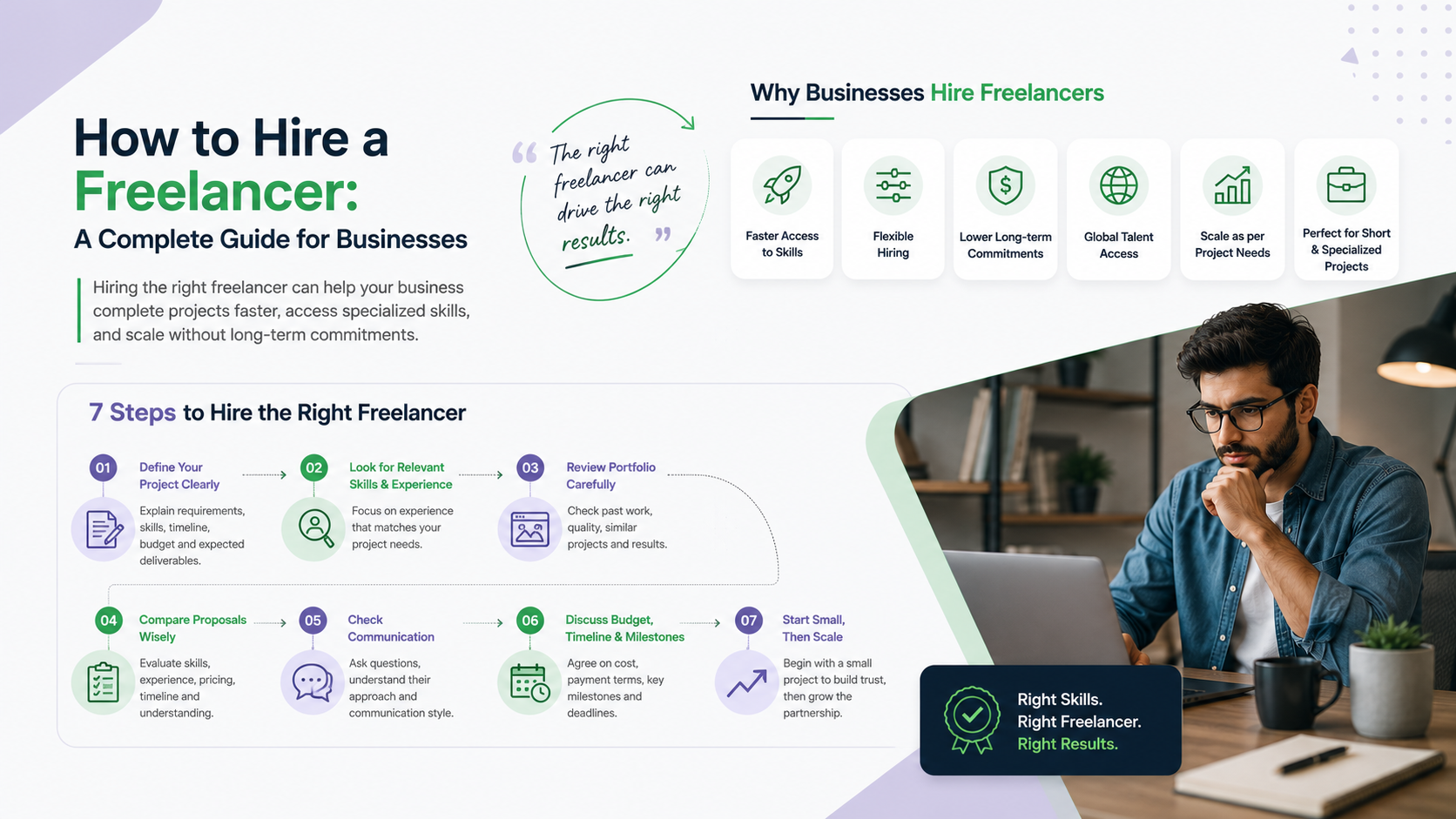
An efficient hiring process starts before selecting a freelancer.
Following a structured process can help businesses organize their requirements and evaluate relevant professionals.
Step 1 — Define the Project
Clearly explain the problem you want to solve, expected deliverables, timeline, and project requirements.
Step 2 — Identify the Required Skills
Determine the technical, creative, or professional skills needed to complete the project.
Step 3 — Review Relevant Freelancer Profiles
Focus on professionals whose skills, experience, and portfolio are relevant to the project.
Step 4 — Compare Important Factors
Consider skills, experience, portfolio, communication, availability, pricing, and overall project fit together.
Step 5 — Discuss Expectations
Before hiring, make sure both sides understand the scope, timeline, deliverables, communication process, and revisions.
Step 6 — Define Project Milestones
For larger projects, divide the work into manageable stages with clear outcomes.
Step 7 — Understand the Payment Process
Review the marketplace's payment process and relevant terms before starting the project.
Step 8 — Start the Project
Once the requirements, expectations, milestones, and payment terms are clear, begin the project with an agreed structure.
What to Check Before Hiring a Freelancer
Before selecting a freelancer, businesses can use this simple checklist.
Project Requirements
☐ Is the project scope clearly defined?
Skills
☐ Does the freelancer have the required expertise?
Portfolio
☐ Is their previous work relevant to the project?
Experience
☐ Do they have suitable experience for the type of work?
Communication
☐ Are the requirements and expectations clearly understood?
Availability
☐ Can the freelancer work within the required timeline?
Pricing
☐ Are the project costs clearly understood?
Milestones
☐ Are the important stages of the project defined?
Payments
☐ Is the payment process clear?
Final Deliverables
☐ Are both sides aligned on what needs to be delivered?
How LoudSup Helps Businesses Find Freelancers
LoudSup is a freelance marketplace where businesses can discover freelance professionals for different project requirements.
Businesses can explore relevant talent and consider information such as skills, experience, portfolios, and project requirements when evaluating potential freelancers.
For businesses looking to hire freelancers online, the focus should be on finding a suitable match between the project's requirements and a professional's expertise.
Explore more:
Hire Freelancers Online → /hire-freelancers
Trust & Safety → /trust-safety
Frequently Asked Questions
What is a freelance marketplace?
A freelance marketplace is an online platform that connects businesses with freelance professionals for projects and other work requirements.
How do businesses hire freelancers online?
Businesses can define their project requirements, search for relevant professionals, review profiles and portfolios, compare suitable candidates, discuss expectations, and agree on project terms before hiring.
How do I choose the right freelancer?
Review the freelancer's relevant skills, experience, portfolio, communication, availability, pricing, and overall fit with your project requirements.
Are verified freelancers safer to hire?
Verification may provide additional information about a freelancer, depending on the marketplace and its verification process. Businesses should still review the freelancer's skills, portfolio, experience, availability, and project fit before hiring.
How can businesses manage freelance projects?
Businesses can make projects easier to manage by clearly defining the scope, deliverables, communication process, deadlines, payment terms, and milestones.
Ready to Find the Right Freelancer?
Finding the right freelancer starts with understanding your project requirements and identifying professionals whose skills and experience match your needs.
Explore freelance professionals based on your project requirements and find talent for your next project.
Hire Freelancers Online with LoudSup
→ /hire-freelancers
LoudSup Team
Writer at LoudSup